Why You Need a US Company
Before taking an AI product global, you’ll need to sort out a few things:
- Collecting payments: To charge users worldwide, the go-to payment processor is Stripe — and it requires a company entity in the US (or another supported region) plus a local bank account.
- Getting a credit card: Run all necessary company expenses through a credit card to keep tax filing simple. With Mercury, you can also issue sub-cards to your employees — quick and convenient.
- Fundraising: If the business takes off and you want to raise from USD funds, a US entity is a must.
Below is a fairly standard path: you can start collecting payments within a week, and get your tax ID (allowing withdrawals to your bank card) in 2-3 weeks.
Incorporating the Company
Tax rates vary by state, and some states — like Delaware — are tax-free, which is why companies are typically incorporated there. The easiest route is Stripe Atlas, which handles the whole process online from anywhere.
Link: https://stripe.com/atlas
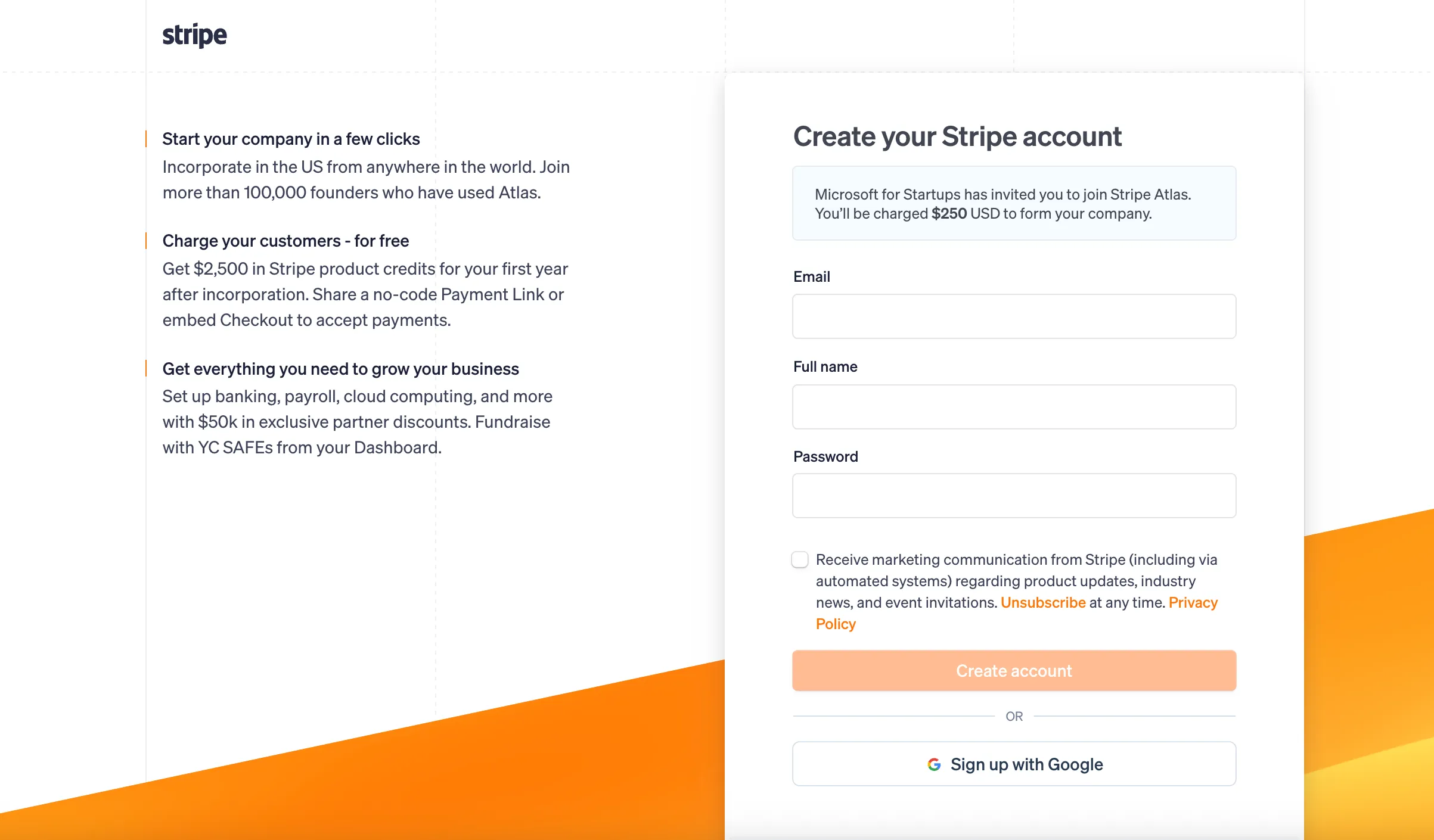
Stripe Atlas charges $500 for incorporation, but you can save 50% by signing up through Microsoft for Startups: https://dashboard.stripe.com/register/atlas?atlas_invite=prod-microsoftforstartups-JJik83
Choosing a Company Type
If you’re starting lean, a single-member LLC is the way to go — annual tax filing is much simpler. The C-Corp option is mainly for setting up a Cayman structure.
Opening a Mercury Bank Account
Use this referral link to get a $250 bonus: https://mercury.com/r/async-genius
Registered Address
During signup I hit a sub-page asking for a US address, and there was an officially recommended service charging a few dollars a month — but it turns out the address that comes with Stripe Atlas works just fine.
Tax Filing
For an LLC, taxes for the year of incorporation are due by the end of April the following year — so it’s not something to worry about in year one. I’ll write up the details separately.